


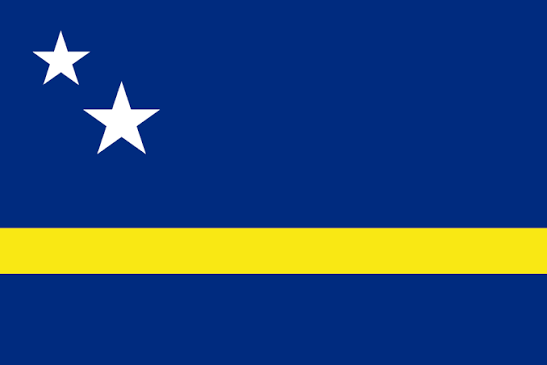
Curaçao presents a paradox of the modern Caribbean. A constituent country within the Kingdom of the Netherlands, it boasts a deep natural harbor, a UNESCO-listed historic center in Willemstad with its distinctive Dutch colonial architecture, and a strategic location near Venezuela. Yet beneath the tourist veneer of beaches, Curaçao liqueur, and colorful waterfronts lies a long-documented pattern of weak oversight, opaque financial structures, political volatility, and vulnerabilities to organized crime and fraud. The island’s offshore gaming industry, in particular, has drawn sustained international criticism for enabling operators who serve markets illegally elsewhere, with persistent questions about beneficial ownership, anti-money-laundering (AML) controls, and regulatory capture.
Recent events—including a major data breach at the Curaçao Gaming Authority (CGA), allegations surrounding gaming reforms, a high-profile tax administration scandal, and the unfolding QuickPromo investment scheme—have intensified scrutiny. This account draws on historical records, investigative reporting, official warnings, and public records to examine the trajectory from colonial outpost to autonomous jurisdiction wrestling with governance failures. Allegations of bribery, secretive deals, and regulatory shortcomings are presented as reported, with noted denials where applicable. Claims of readiness for abrupt regime change or extralegal intervention remain speculative commentary rather than substantiated forecasts; Curaçao operates under a constitutional framework with Dutch Kingdom oversight on certain matters.
Indigenous Roots, Colonial Exploitation, and the Foundations of Trade
Human presence on Curaçao dates back millennia. Archaeological evidence points to habitation as early as roughly 3700 BCE in some analyses, with clearer traces from around 2900–2300 BCE at sites such as Rooi Rincon. The Caquetío, an Arawak-speaking people from the South American mainland, established settlements, leaving petroglyphs still visible near Hato Caves and other locations. By the time Europeans arrived, an estimated 2,000 Caquetío lived on the island.
Spanish explorer Alonso de Ojeda reached Curaçao on 26 July 1499. Spain claimed the island but found little gold or fertile land, labeling it relatively “useless.” Many Indigenous inhabitants were enslaved and transported to Hispaniola or other colonies. Spanish control lasted until 1634, when the Dutch West India Company (WIC) seized the island with minimal resistance. The Dutch transformed Curaçao into a commercial and maritime hub centered on the deep natural harbor of St. Anna Bay (now Willemstad). It became a major node in the transatlantic slave trade during the 17th and 18th centuries, with enslaved Africans laboring on plantations and supporting trade. Sephardic Jews fleeing persecution also settled, contributing to commerce and culture. The island served as a free port at times, facilitating regional trade and smuggling.
Resistance marked the colonial era. In 1795, the enslaved man Tula led a major uprising inspired in part by the Haitian Revolution, demanding freedom and rights. The revolt was suppressed; Tula was executed and later became a national symbol of resistance. British forces occupied the island during the Napoleonic Wars, but Dutch control was restored by 1815. Slavery was abolished in 1863, leading to economic hardship until the early 20th century discovery of oil in Venezuela’s Maracaibo Basin. A major refinery was built on Curaçao, bringing industrialization, migration, and relative prosperity, though also labor tensions and environmental costs.
Politically, Curaçao formed part of the colony of Curaçao and Dependencies, then the Netherlands Antilles from 1954 with autonomy in domestic affairs. After Aruba’s earlier status aparte, a 2006 agreement led to the dissolution of the Netherlands Antilles. On 10 October 2010 (“10-10-10”), Curaçao became a constituent country within the Kingdom of the Netherlands, sharing the Dutch monarch as head of state while handling most internal affairs. Dutch remains an official language alongside Papiamentu, English, and Spanish. This autonomy brought self-government but also exposed structural weaknesses in institutions, fiscal management, and regulation of high-risk sectors.
The Offshore Gaming Machine: Master Licenses, Lax Oversight, and International Repercussions
Curaçao’s modern notoriety centers on online gambling. In the 1990s, after telecom upgrades, the island enacted the Landsverordening buitengaatse hazardspelen (LBH or National Ordinance on Offshore Games of Hazard). This created a master-license system. A small number of private companies received master licenses from the government and then issued unlimited sub-licenses to operators worldwide. Master license holders included entities linked to Cyberluck/Curaçao eGaming, Antillephone, Gaming Curaçao/Gaming Services Provider, and others. Sub-licenses were inexpensive and fast to obtain, with limited due diligence, no robust public register of beneficial owners in many cases, and minimal direct supervision of sub-licensees by the state.
The model proved highly attractive. Thousands of online casinos and sportsbooks operated under Curaçao authorization, many targeting players in jurisdictions where they lacked local licenses. Operators often used letterbox companies, trust offices, and complex structures. Dutch directors appeared frequently. International regulators in Europe, Australia, the United States, and elsewhere blacklisted numerous Curaçao-linked sites for illegal operations, AML breaches, and consumer harm. The system generated revenue and employment on the island but drew accusations of facilitating money laundering, tax evasion, and organized crime access. Caribbean Financial Action Task Force (CFATF) assessments have repeatedly flagged online gambling, illegal lotteries, real estate, and the informal/cash economy as high-risk for money laundering, noting Curaçao’s strategic location near drug trafficking routes. National strategies have acknowledged limited visibility into cash flows in the sector.
Investigative reporting has linked Curaçao structures to networks involving cryptocurrency, shell companies, and operators accused of serving restricted markets. One former financial director of a Northern Cyprus-linked gambling organization described Curaçao as a place where questions about the origin of funds were rarely asked in practice. Trust offices managed dozens of entities each. The opacity made tracing ultimate beneficial owners difficult for foreign authorities and journalists.
Pressure mounted, including from the Netherlands (concerned about Kingdom reputation and conditioning pandemic-era support on reforms) and international AML reviewers. In response, Curaçao enacted the Landsverordening op de Kansspelen (LOK or National Ordinance on Games of Chance), effective late 2024. It abolished the master/sub-license model, created or empowered the Curaçao Gaming Authority (CGA, evolving from the earlier Gaming Control Board) for direct licensing, and introduced stricter requirements on ownership transparency, AML, and supervision. Operators had to reapply. Provisional licenses were issued during transition.
Implementation has been turbulent. Foreign consultants, including former Malta Gaming Authority head Mario Galea and associates via Random Consulting Ltd., played key roles in building systems and due diligence processes. Allegations of irregularities quickly surfaced. In late 2024, opposition parliamentarian and forensic investigator Luigi Faneyte submitted a lengthy report to the attorney general accusing then-Finance Minister Javier Silvania, Galea, and others of fraud, embezzlement, money laundering, and abuse of office tied to provisional licenses, portal management, and related processes. Claims included questionable staffing assertions, bankruptcies of some provisional licensees leaving debts, and conflicts of interest. Silvania, Galea, and others denied the accusations as baseless; the Gaming Control Board/CGA disputed specific assertions and emphasized due diligence steps. Later probes into consulting payments were announced.
In 2025–2026, the CGA’s supervisory board resigned amid political transitions and integrity questions (later partly walked back in some accounts). Silvania resigned as finance minister in October 2025 following leaked audio of a heated confrontation with Tax Receiver Alfonso Trona involving mutual corruption accusations. The CGA was shifted under the Ministry of Justice. A major breach of the CGA’s licensing portal (unauthorized access via a false-identity account from late 2025 into 2026) led to the leak of tens of thousands of documents. Investigative outlet Follow the Money and partners (“Casino Secrets”) reported that assessors had recommended licenses in multiple cases despite unresolved questions about ownership, source of wealth, or financial capacity—including for high-profile operators. The CGA confirmed unauthorized access, retired the portal, maintained that existing licenses remained valid under interim arrangements, and pursued legal action. It disputed characterizations of systemic failure and noted transitional challenges. Experts warned that incomplete ownership transparency heightens money-laundering and organized-crime risks in a sector already rated high-risk.
These developments illustrate a recurring pattern: ambitious legal changes intended to close loopholes encounter implementation gaps, political interference allegations, reliance on external contractors, and limited institutional capacity. Whether the LOK ultimately strengthens oversight or merely rebrands opacity remains under observation as of late 2026, with ongoing AML regulation updates and compliance deadlines for operators.
Broader Corruption Patterns and Official Scandals
Gaming is not isolated. Public records and reporting document multiple scandals involving government figures and institutions:
- Tax administration: Audits by the Stichting Overheidsaccountants Bureau (SOAB) examined interventions by Tax Receiver Alfonso Trona. Reports described personal handling of payment arrangements, write-offs, advances, and seizures—often via phone or WhatsApp, outside standard procedures—benefiting certain civil servants, officials, and others. Silvania forwarded reports to parliament in 2024 highlighting favoritism. Mutual public accusations between Silvania and Trona via leaked audio precipitated Silvania’s resignation. Accountability outcomes have been limited in public reporting.
- Refineria di Kòrsou (RdK) bribery: Former RdK director Roderick van Kwartel and others were convicted in a bribery scheme involving efforts to secure a strategic partner for the refinery and related assets. Sentences (including years in prison) were largely upheld on appeal. The case involved demands for large payments and ongoing fees tied to oil volumes.
- Public works: Arrests in ongoing probes into the Public Works Implementation Agency involved allegations of bribes for contracts, particularly asphalt works, bypassing tenders. Minister Charles Cooper had filed complaints.
- Central Bank figures: Former Central Bank of Curaçao and Sint Maarten president Emsley Tromp faced demands for prison time in a case involving alleged bribery, forgery, and money laundering related to commissions and transfers.
- International facilitation: Follow the Money reporting detailed Curaçao-based shell companies and a local facilitator allegedly used to channel roughly $18 million in bribes linked to oil trader Vitol toward officials in Latin America. The same facilitator had prior links to warnings about facilitating online gambling.
- Assassination of Helmin Wiels: In May 2013, Helmin Wiels, leader of the Pueblo Soberano party, independence advocate, and outspoken critic of corruption (including illegal lottery activities), was shot dead on a beach in broad daylight. It was the first political assassination in modern Curaçao history. Convictions followed for the shooter (life sentence) and intermediaries. Prosecutors linked the murder to organized crime, specifically elements of the gambling underworld and the “No Limit Soldiers” group, with political dimensions alleged in some accounts (including ties to figures around then-prime minister Gerrit Schotte’s circle). Wiels had received threats and was at times under protection. The case shocked the island and highlighted intersections of politics, crime, and anti-corruption activism.
Earlier political crises included rapid government collapses after 2010 autonomy, integrity questions around the Schotte cabinet, and a 2017 episode in which the short-lived Pisas I cabinet sought to cancel elections—described by Dutch officials as effectively a coup attempt and blocked with gubernatorial and Kingdom involvement. These episodes underscore institutional fragility rather than a continuous conspiracy.
The QuickPromo Episode: Crypto Pyramid Risks in Real Time
In 2025–2026, QuickPromo (also referenced as Quick Promo or QP313) emerged as a social-media-promoted online platform promising high returns through digital activities, subscriptions, recruitment rewards, and crypto elements (including USDT). The Centrale Bank van Curaçao en Sint Maarten (CBCS) issued public warnings in September and November 2026, characterizing features as consistent with pyramid schemes—high-risk, unsustainable structures that pay earlier participants with funds from newer ones. A later message demanding an additional US$300 within 72 hours to “verify” accounts or risk losing access and prior deposits was flagged as a sign of financial strain potentially preceding collapse. Extra payments offered no recovery guarantee and increased loss risk.
Former finance minister and MFK parliamentarian Javier Silvania pressed for investigation, citing unconfirmed figures of roughly 7,000 local participants (including teachers among early joiners) and significant sums already lost by groups of victims. He questioned the timing of CBCS warnings and called for probes into local intermediary bank accounts used to receive and forward funds abroad. Premier Gilmar Pisas stated the government could not recover lost funds for participants and noted prior public cautions. Cybersecurity groups urged victims to file police reports and preserve evidence of crypto and bank transactions. As of mid-November 2026, the scale of losses and any recovery remain under clarification; the episode fits a broader pattern of opportunistic schemes exploiting limited financial literacy, crypto opacity, and regulatory lag.
Political Landscape and Governance Pressures
MFK under Prime Minister Gilmar Pisas secured an absolute majority in the March 2025 elections—the first single-party majority since autonomy—consolidating power after earlier coalitions. This reduced excuses of coalition paralysis but heightened expectations and scrutiny over delivery on reforms, fiscal management, and integrity. Opposition voices, including from PAR and others, have criticized transparency deficits, bonus controversies, and handling of scandals. Silvania’s earlier popularity and subsequent fall illustrated internal frictions. Opinion pieces and parliamentary activity reflect frustration with perceived favoritism, weak enforcement, and populist spending.
Curaçao’s small size, personal networks, cash-intensive informal economy, proximity to trafficking routes, and dependence on tourism, financial services, and residual refining create structural risks. Kingdom mechanisms (governor, mutual assistance, financial supervision boards) provide backstops, as seen in past crises, but day-to-day governance rests with local institutions. Calls for stronger accountability, independent probes, and capacity-building are common; advocacy for extralegal “coups” or imposed governments ignores the constitutional order, democratic elections, and the practical realities of Kingdom relations. History shows that violence (Wiels) and near-constitutional breaches have been met with institutional and judicial responses rather than systemic overthrow.
Patterns, Accountability, and Paths Forward
The record shows recurring themes: private actors granted quasi-regulatory power with insufficient oversight; legal reforms undermined by weak implementation, political patronage allegations, and external consultants; high-risk sectors (gaming, real estate, informal finance) exploited for laundering; mutual accusations among officials that rarely culminate in swift, transparent prosecutions; and public schemes that prey on residents. “Fake” or lightly scrutinized licenses under the old system, and lingering questions under the new one, have real consequences for players worldwide and the island’s reputation. Bribes and backdoor arrangements appear in specific adjudicated cases (RdK) and audit findings (tax). Secretive ownership structures persist as a core vulnerability flagged by experts.
Yet Curaçao is not unique in facing these challenges among small jurisdictions or post-colonial societies. Progress on the LOK, updated AML rules for casinos, CFATF engagement, and public debate indicate awareness. Effective change requires consistent enforcement, genuine beneficial-ownership transparency, reduced reliance on opaque intermediaries, protection for whistleblowers and anti-corruption voices, and institutional independence insulated from short-term politics. Democratic elections, parliamentary oversight, independent media and auditors, and Kingdom cooperation remain the legitimate avenues—not extraconstitutional disruption.
The island’s history of resilience—from Indigenous adaptation through slavery, emancipation, oil booms, and autonomy—suggests capacity for reform when incentives and accountability align. Whether current leadership and institutions deliver measurable improvements in licensing integrity, public-finance transparency, and protection against fraud will determine if Curaçao sheds its reputation as a jurisdiction of convenience for questionable operators or continues to attract the attention of investigators, regulators, and critics. The documents, audits, court records, and bank warnings already in the public domain provide a substantial evidentiary base for that ongoing assessment.


