


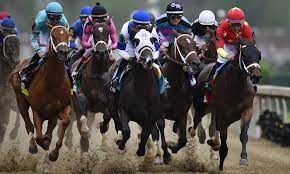
The horse racing industry has been struggling to make a comeback, and 2024 proved to be another challenging year. Wagering on Thoroughbred horse races in the United States declined for the third consecutive year.
Declining Numbers
Thoroughbred racing, the most popular form of the sport in the U.S., includes marquee events like the Triple Crown (Kentucky Derby, Preakness Stakes, and Belmont Stakes) and the Grand Slam of Thoroughbred racing (Travers Stakes and Breeders’ Cup Classic). According to Ray Paulick of the Paulick Report and Equibase, the industry’s official database, wagering on Thoroughbred races totaled approximately $11.26 billion in 2024, a 3.35% decline from 2023 when betting exceeded $11.65 billion.
A dismal December for U.S. wagering on Thoroughbred horse racing highlighted the worst year for the industry since 2020, when the COVID-19 pandemic impacted businesses nationwide. The total number of race days decreased by 2.4% to 3,787, and the total number of races declined by 2.8% to 30,852. Parimutuel wagering reached a record high in 2003 with bets totaling over $15.1 billion, or an inflation-adjusted $25.7 billion.
Gaming’s Role in Supporting Horse Racing
Several states, including Massachusetts, New York, and Pennsylvania, allocate substantial tax revenue generated by their commercial casinos to support their horse racing industries. In Pennsylvania, casinos have subsidized horsemen with more than $4 billion since the first slot machines were introduced in 2004. Nebraska is following Pennsylvania’s example, approving racetrack casinos with slot machines, table games, and sports betting in 2020.
Virginia legalized historical horse racing (HHR) machines in 2018, which has saved the Colonial Downs Racetrack, with players wagering more than $4 billion annually on these machines. HHR has also found favor in other states with parimutuel betting but no commercial casinos, including Kentucky and Alabama. Despite these efforts, Equibase data shows that casino gamblers are not being converted into horse racing bettors, and recent scandals, including one involving legendary trainer Bob Baffert, have not helped.
Closure of Storied Tracks
New Jersey’s Freehold Raceway, considered the oldest horse racetrack in the country, officially closed on Dec. 28. Freehold traced its roots to the 1830s, with harness racing becoming its staple in 1854. Penn Entertainment and Greenwood Gaming and Entertainment jointly owned Freehold. Penn operates four casinos in Pennsylvania, while Greenwood owns and operates Parx. Despite its historical significance, Freehold could not withstand the industry’s decline.
As the horse racing industry continues to face challenges, efforts from the gaming sector to revive the sport remain crucial. Whether these initiatives will be enough to bring back the glory days of horse racing remains to be seen.


